Silhouettes:
An exhibition by Aboud Fares & James Seet
9th May 2026 - 31st May 2026
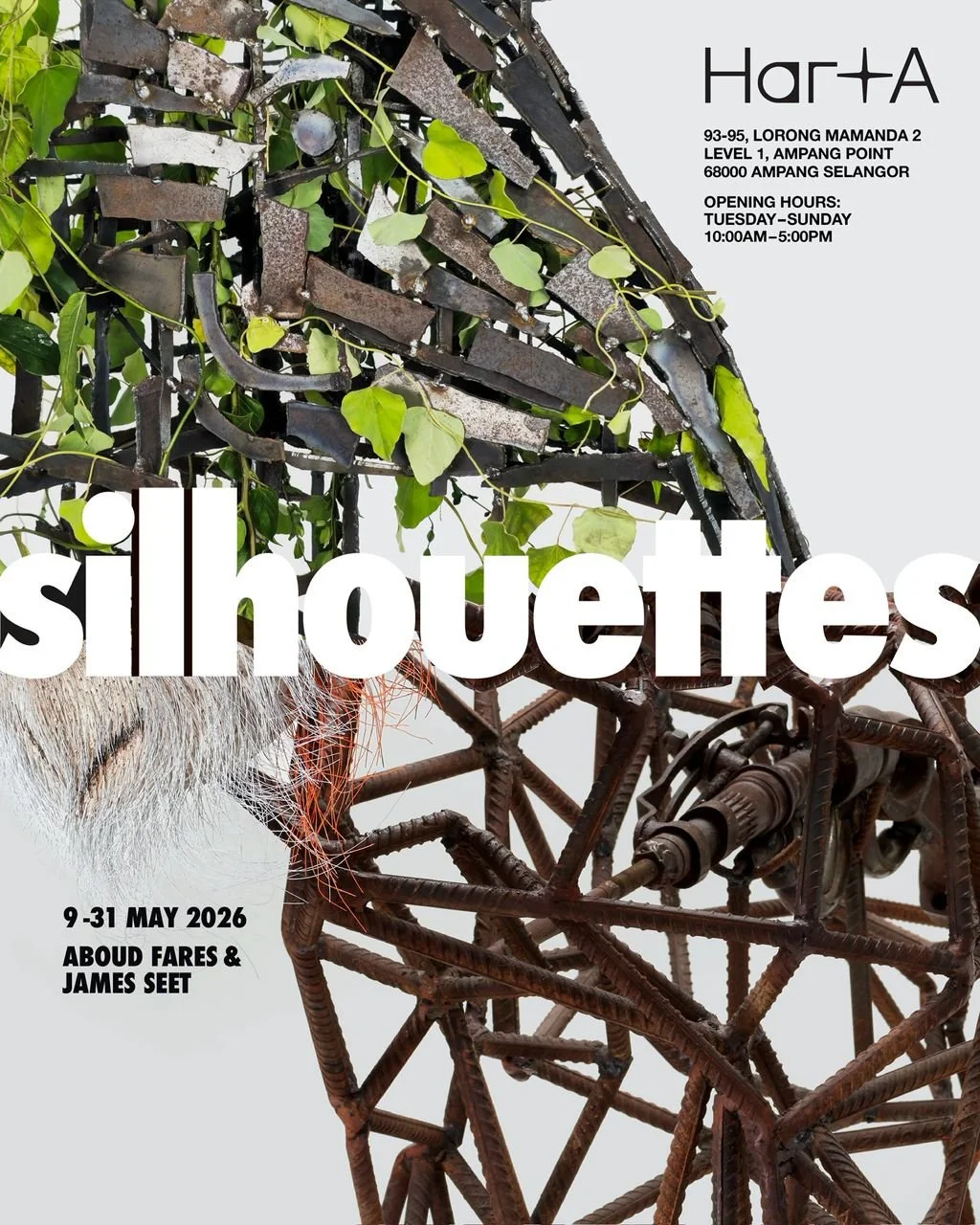
HARTA presents Silhouettes, a compelling exhibition by Aboud Fares and James Seet, on view 9 from to 31 May 2026. The exhibition brings together a series of sculptural works that engage with endangered and vanishing species, not as subjects to be depicted, but as forms to be reconsidered through interruption, fragmentation and change. Rather than presenting the animal in its entirety, the works offer partial presences that exist between recognition and loss, inviting viewers to reconsider how these forms are seen, remembered, and understood, while reflecting on the delicate boundary between existence and disappearance in an increasingly uncertain world.
Working in distinct yet converging approaches, Aboud Fares and James Seet construct forms shaped by external forces. Metal structures cut, contain, and reframe the body, while ceramic surfaces fracture and yield under pressure. These gestures do not restore the animal's form; instead, they alter it, revealing how systems, actions, and time intervene.
Silhouettes explore what it means to witness the disappearance of a species. Not only the silence that follows, but the absence that continues to shape how we see, remember, and respond. Focusing on endangered animals of Southeast Asia, such as the Sumatran Rhinoceros, Malayan Tiger, Malayan Tapir, Pangolin, Mousedeer, and Sun Bear, the exhibition presents them as partial presences rather than complete forms.
Through sculptural works by Aboud Fares and James Seet, animal figures are fragmented, interrupted, and reshaped by external forces. Aboud’s metal structures impose rigid frameworks that cut through and reorganise the body, while James Seet’s ceramic and metal works reveal fragile forms disrupted by embedded elements that suggest intrusion and pressure.
In both practices, the animals are intentionally incomplete, existing between presence and loss. Rather than recreating the animals as they once were, the sculptures act as traces of transformation, reflecting how extinction operates gradually, leaving only fragments behind. Within this context, the silhouette becomes not just an outline, but a condition where absence carries weight and continues to shape what remains.